Match Pantone TCX Colors in Your Sock Design
Last updated on August 1, 2026
Color accuracy in custom socks is like parallel parking — everyone thinks they’re great at it until someone’s watching. (We’re the someone watching.) The fix is simple: specify your colors with Pantone TCX references, which Pantone LLC designed for cotton yarn and fiber, rather than Pantone C or U (those are for ink on paper, not yarn on feet). In this post we’ll show you how to match Pantone TCX colors for your sock design — and how we turn that code into real, holdable yarn.
To match Pantone TCX colors in your sock design, buy a Pantone Cotton Passport (FHIC200), use Pantone Color Manager software, or find codes via Pantone’s free online Color Finder. Send us the TCX code and we match it to the closest cotton yarn in our library — or custom-dye a fresh batch for large orders. We send you a color-match confirmation photo before sampling, so nothing goes into production blind.
Frequently Asked Questions
Q: What’s the difference between Pantone TCX and Pantone C?
Pantone TCX (Textile Cotton eXtended) is printed on real cotton fabric — the same material your socks are made of. Pantone C (Coated) is printed on coated paper stock for graphic design and printing. For socks, TCX is the accurate reference; Pantone C is an acceptable, cheaper fallback.
Q: Can I use RGB or CMYK values instead of Pantone?
Yes, if color precision isn’t critical. RGB and CMYK are screen/printer values and shift noticeably between displays (your designer’s calibrated monitor ≠ your customer’s phone). We accept them for lower-accuracy jobs, but for brand-critical colors, always use a physical Pantone reference.
Q: How do you confirm the color before production?
After matching your Pantone code to a yarn from our library (or custom-dyeing one), we photograph the yarn next to your original color reference and send you the photo. You approve it. Only then does sampling or bulk production start. No “surprise, your teal is actually brown” moments.
Q: What if I don’t own any Pantone book?
Send us any physical color standard you have — a competitor’s sock, a fabric swatch, a printed chip. We can also use online Pantone tools on our end to find the closest match in our yarn library and propose options for you.
Q: Can you custom-dye yarn to an exact color?
Yes — for large orders (typically hundreds of thousands of pairs), we custom-dye a batch to your exact Pantone, knit a finished sample sock, and ship it to you for sign-off. Once you confirm, bulk production runs to that standard.
Q: Which Pantone book should I buy for socks?
The full Pantone TCX Cotton Passport is the gold standard but expensive. A practical compromise is a Pantone Solid Coated (C) guide at roughly $200–300 — affordable, and we can cross-reference your C code to the nearest TCX yarn on our side.
There are 3 ways that you can find pantone tcx colors for your design:
- Buy a pantone cotton passport (FHIC200).
- Use Pantone color manager (free if you purchase a pantone color passport).
- Match pantone tcx colors using online free official tools.
How We Match Your Pantone Color to Real Yarn
Finding the TCX code is step one. Step two — the one that actually matters — is turning that code into a real cotton yarn that looks right under your customer’s kitchen light. Here’s our workflow:
- You send the Pantone code (TCX preferred, C acceptable, RGB/CMYK workable for looser tolerance).
- We search our in-house yarn library — over 1,000 cotton colors in stock for normal and combed cotton, plus merino, bamboo, and blends.
- We pick the closest match and photograph it next to your reference swatch. (Real example below.)
- You approve the photo — or ask for an adjustment.
- Only then do we move to sampling or bulk production.
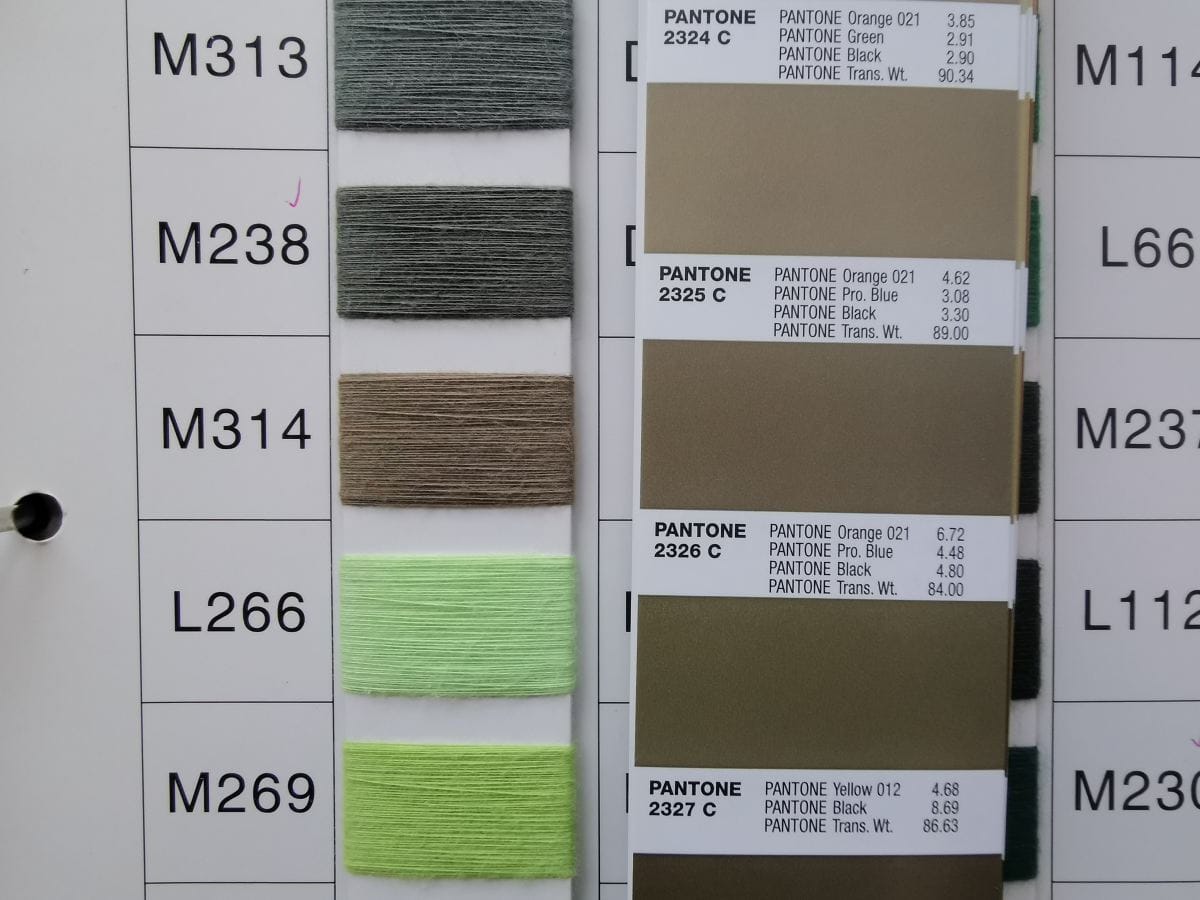
In this real case, the client supplied PANTONE 2326C (right). We matched it to M314 cotton yarn (left) from our library and sent this exact photo for approval before knitting a single sample. The match isn’t a screen approximation — it’s yarn on yarn, photographed in daylight. What you approve is what you get.
For non-stock colors (mercerized cotton, wool, bamboo, etc.), we custom-dye a batch to your specified Pantone TCX and follow the same photo-confirmation step.
1.Buy a pantone cotton passport (FHIC200)
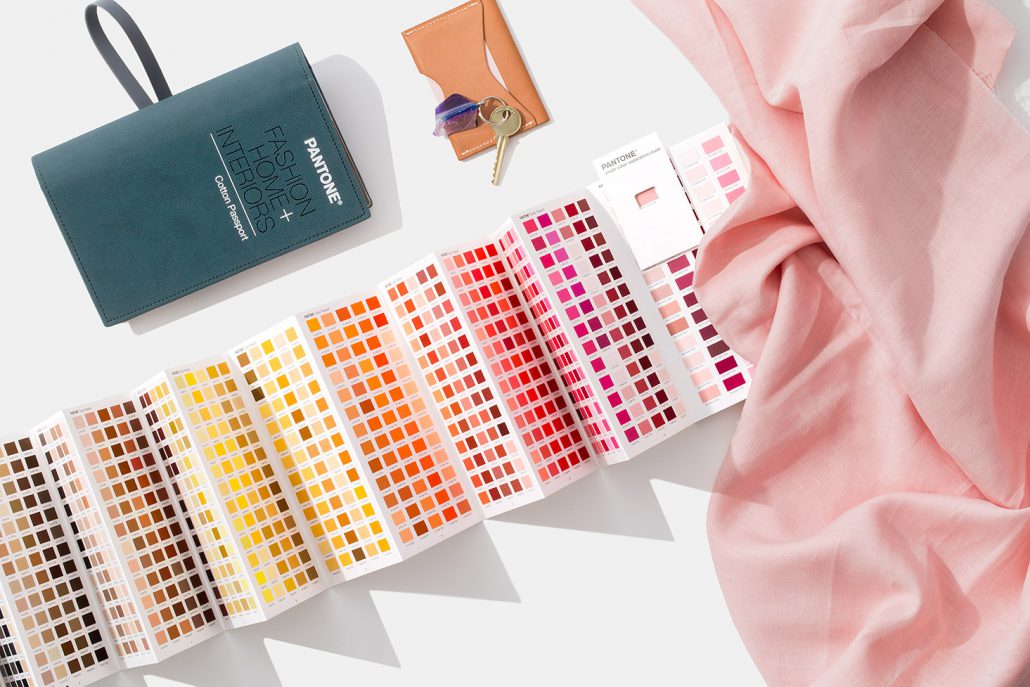
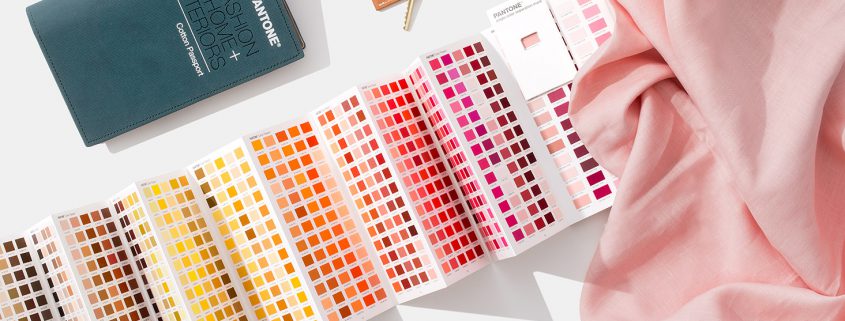 Simply go to https://www.pantone.com/cotton-passport and you will can buy directly from there. This is suggested if you want to match exact colors for your socks, since screen display can hardly guarantee color accuracy.
2.Use Pantone color manager (free if you purchase a pantone color passport).
You can use pantone color manager to access over 10,000 Pantone Colors for use in Adobe® design programs. However, note that pantone tcx color reference offers only 2310 colors. If you don’t have a cotton passport at hand simply buy it from pantone color manager website.Check out the video on Pantone Youtube Channel for a quick guide on how to use pantone color manager:
3.Match pantone tcx colors using online free official tools.
3.1 Go to https:www.pantone.com/color-finder
Color finder is an official tool for you to select proper pantone colors, but note that the digital color simulations vary from different screens thus it do not match the physical Pantone Color Standards. In addition, if you have a pantone color code but have no idea about its actual color on screen, you can find the color here using the code.
3.2 Select your ideal color on your screen;
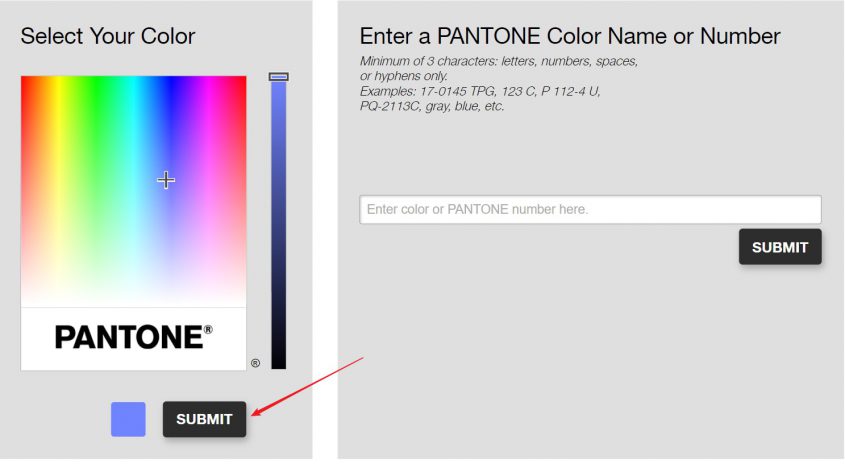
Once you are in the color-finder page, select your color in the left side and then click “SUBMIT”. For example,I find the light blue(see pic below) fits my design well and I want to find the Pantone TCX color of it to ensure color accuracy.
3.3 Scroll down the page to section “Fashion and Interior Designers”
There are 3 section in the results page:
- Graphic Designers;
- Fashion and Interior Designers;
- Industrial Designers;
What we want is to select TCX colors in the “Fashion and Interior Designers” section, the other 2 sections are not for cotton industry;
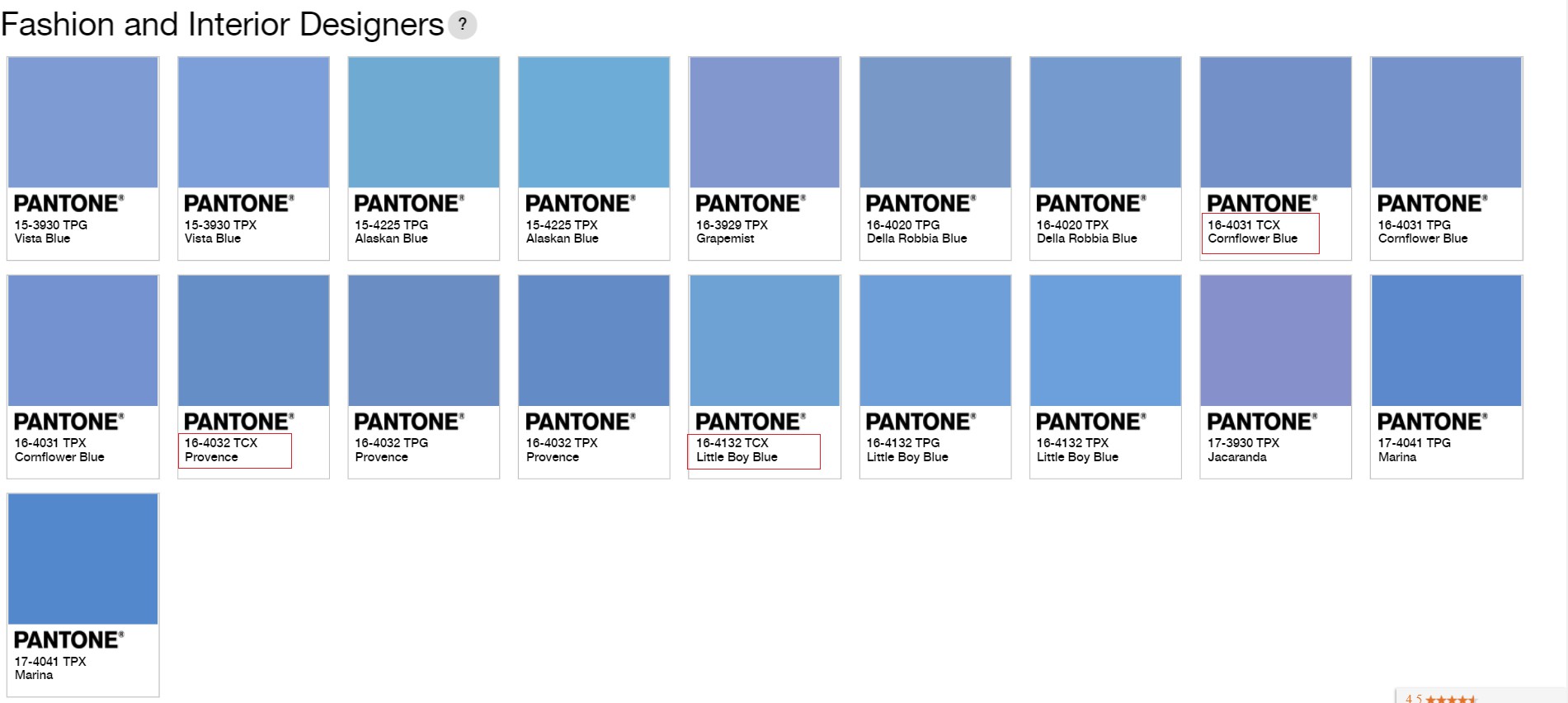
So we see 3 colors(there might be more or less colors for your case) ending with “TCX”, you can just choose the best code from these 3 colors.
Pantone C vs Pantone TCX: Which Should You Use?
Here’s the honest, budget-aware answer most color guides dodge. Pantone TCX is the correct reference for socks — it’s dyed on cotton fabric, so what you see is what knits. The catch: a full TCX Cotton Passport runs into the thousands of dollars. Most emerging brands don’t have one, and that’s fine.
Pantone C (Solid Coated) is printed on coated paper for graphic design. It’s not a perfect physical match to cotton yarn, but it’s close enough that we can cross-reference your C code to the nearest TCX yarn in our library. A Pantone C guide costs roughly $200–300 — a practical compromise for brands that need real color control without the textile-grade price tag.
Our recommendation: if you’re serious about sock color accuracy, buy a Pantone C guide. It’s the best color-per-dollar on the market, and we handle the C-to-TCX translation on our side. Save the full TCX book investment for when you’re running large-volume programs that justify it.
No Pantone Book? Here Are Your Options
No Pantone book, no problem. You have three fallback paths:
- Send any physical color standard — a competitor’s sock, a fabric swatch, a printed chip. We match against it directly.
- Give us RGB or CMYK values — workable for lower-precision jobs. Just remember: screens lie. The same RGB value will look different on your designer’s monitor, your phone, and your customer’s laptop. Treat screen colors as a rough draft, not a contract.
- Let us propose options — tell us the color you want in plain English (“warm terracotta, dusty not bright”) and we’ll use online Pantone tools to shortlist the closest matches in our yarn library and send you photos to pick from.
The common thread (pun intended): we send you a real yarn photo before any production starts, regardless of how the color was specified.
Custom Dyeing for Large Orders
For large-volume programs — typically hundreds of thousands of pairs — stock yarn matching isn’t enough. You own a brand color, and it needs to be exact, batch after batch. Here’s how that works:
- You specify the exact Pantone TCX (or send a physical master sample).
- We custom-dye a yarn batch to that exact color at our dye house.
- We knit a finished sample sock in the custom-dyed yarn.
- We ship the sample to you for sign-off.
- On your approval, bulk production runs to that confirmed standard — same dye recipe, same color, every pair.
This is how brand-critical colors (think: a company’s signature corporate color, or a sports team’s exact home jersey red) get reproduced accurately across hundreds of thousands of pairs. The dye recipe becomes your color’s fingerprint — we keep it on file for reorders.
For smaller orders (the 100-pair MOQ range), stock yarn matching from our 1,000+ color library is faster, cheaper, and usually close enough. Custom dyeing only makes economic sense at volume.
End
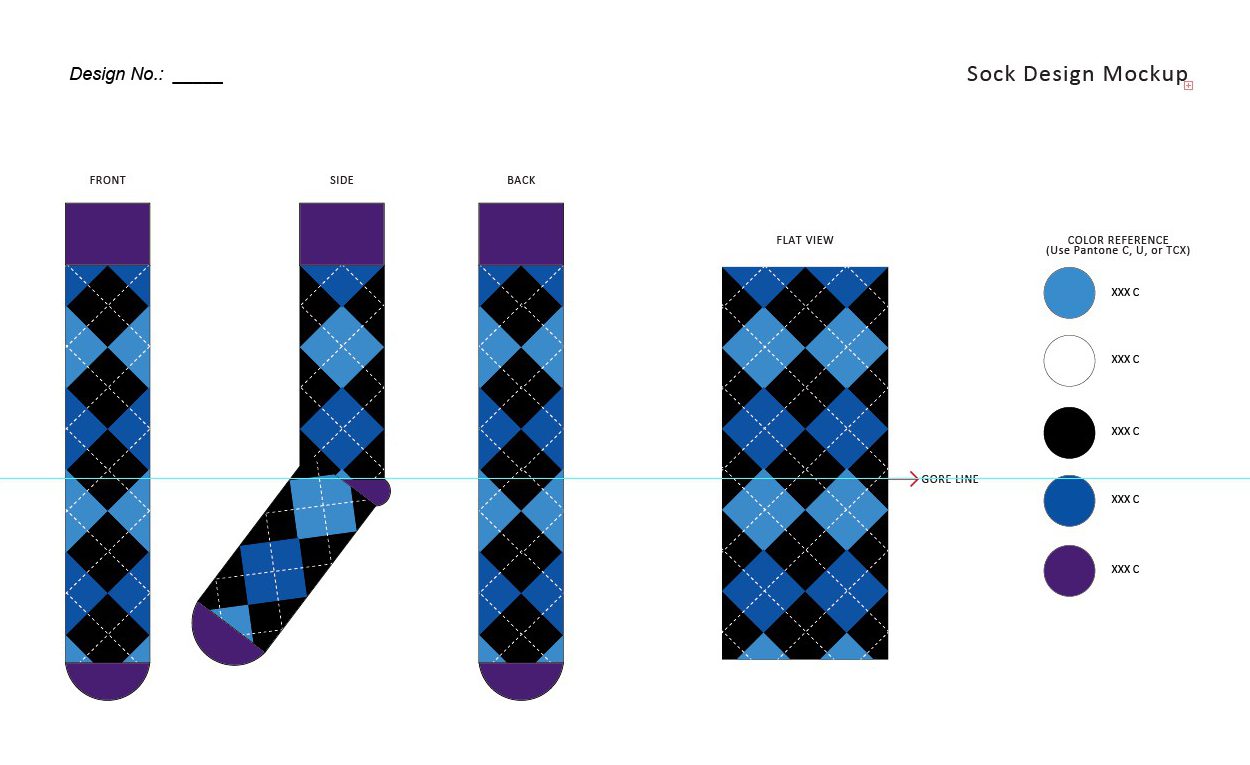
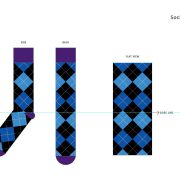
So We have pretty much known how to specify and match pantone tcx colors for your sock designs, now copy the colors into your sock design&mockup (.ai) files so that we can dye the yarn into correct colors, cheers!


Hi, I’d like to create something similar to this:
https://bit.ly/2Otq5s8
OR
https://bit.ly/31Vk37r
100% cotton, pastel colors, every kid size, would you please send me some info ?:)
Kind regards,
Diana
Hi Diana,
We can make that kind of sock, can you advise your ordering quantity?
Best regards,
MeetSocks Team
Hello! We’re looking to make custom one-size socks with a knit-in design. What is your MOQ for standard cotton blend? Do you have a template for our artwork? Thank you!
Hello! Our MOQ for normal custom cotton socks is only 100 pairs! You can always download our design template via this link: https://www.dropbox.com/sh/znh5bw001splm84/AADPRcSHC7Q8Ab62PHfjYaIba?dl=0
Hi, for this pantone tcx color reference, do we have to change our design to the pantone color, or can we reference our color like #000000 = 19-3911 TCX black beauty.
Do we have to change the color on our design to the pantone color, or we can just reference it, for example #000000 black = 19-3911 TCX black beauty.
Yes it’s good practice to use PANTONE codes. Or actually we have an actual SanShan color palatte for Adobe programs, please write to [email protected]