Custom Embroidered Socks: Logo Types, Process & Cost Explained | MeetSocks
Last updated on November 22, 2026
Most sock logos are knitted straight into the fabric, which works great right up until somebody puts the sock on. Then the calf happens. The logo stretches wider than a dad at an all-you-can-eat buffet, and your crisp little crest suddenly looks like modern art — the expensive kind nobody understands. That’s the jacquard problem. And it’s exactly why custom embroidered socks exist.
Custom embroidered socks are socks with a logo stitched onto the fabric after knitting, instead of woven into it. Because the embroidery sits on top of the knit, it stays sharp and slightly raised, keeps the fine details that knitting smudges, and — this is the big one — doesn’t stretch out of shape when an actual human wears the thing. The trade-off is honest: it’s an extra production step with real hands behind it, so it costs more than a knitted-in logo.
I run a sock factory, so what follows is the factory-floor version, not the brochure version. You’ll see embroidery vs jacquard with real photos — same logo, both techniques, side by side — plus the five logo styles we stitch every week, and two insider details (logo splitting, backing paper) that most suppliers would rather keep to themselves. Consider this the menu they don’t hand you.
Embroidered vs Jacquard Sock Logos: Which One Won’t Warp When Stretched?
Quick primer for anyone who’s never wondered how a logo gets onto a sock — no judgment, my plumber recently asked whether socks grow on trees. The standard method is jacquard knitting: the pattern is woven in while the sock is being knitted, thread by thread. It’s fast, it’s cheap, and for big bold designs it’s genuinely brilliant. The catch: that logo is made of the same stretchy fabric as the sock. Stretch the sock, stretch the logo. No opt-out clause, no fine print, no escape hatch.
Why Embroidery Holds Its Shape
Embroidery flips that logic. The logo gets stitched on after the sock is knitted — dense thread laid on top of the surface, like appliqué that refuses to negotiate. Pull the sock sideways and the knit gives, but the stitching barely moves. Result: a logo that looks the same at rest, worn, and fully stretched over a foot that’s had a long day.
Don’t take my word for it. Below is the same logo, made both ways. First, at rest:
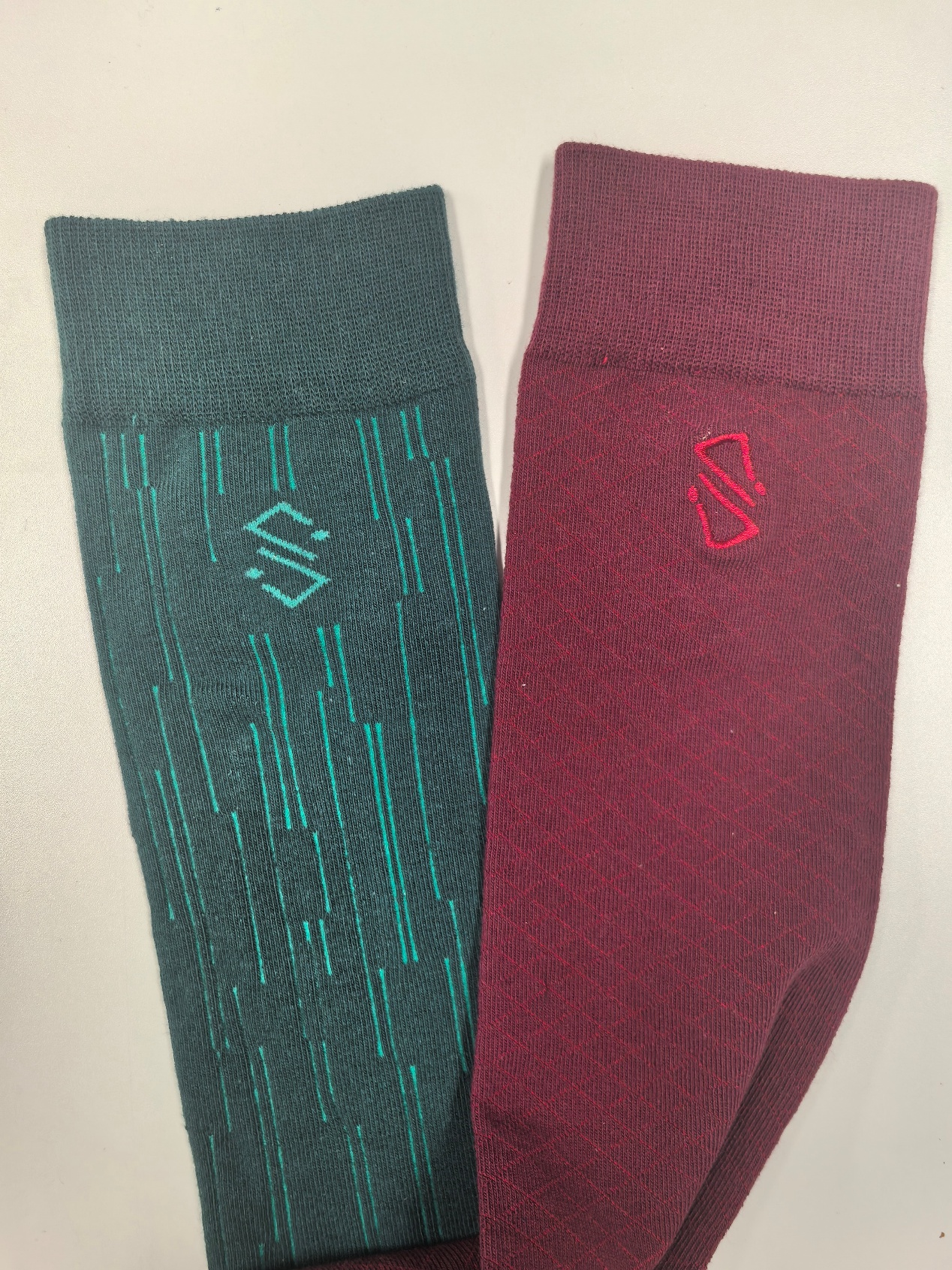
Then stretched. Watch the jacquard version’s edges go soft:
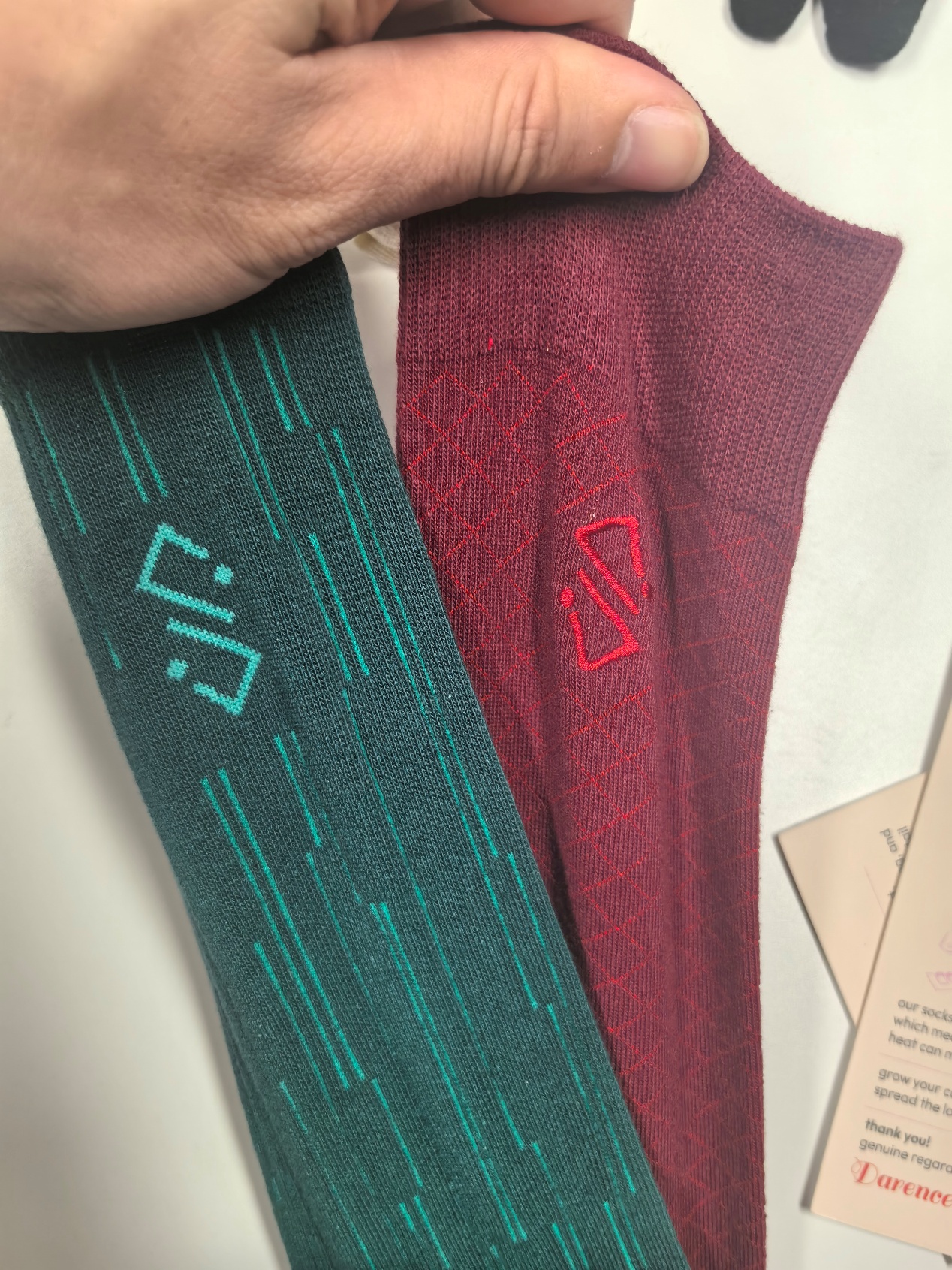
At rest, they look like twins. Stretched, they stop being twins. The jacquard logo goes wide and blurry, letters fattening like it skipped leg day in reverse. The embroidered version keeps its proportions, because thread simply does not care about your calf’s ambitions. It also sits slightly raised, which gives it that dimensional, premium look you can feel with a fingertip. Flat jacquard can’t fake that, no matter how good its intentions are.
The Trade-off: Why Embroidered Logos Cost More
Here’s the part suppliers mumble into their coffee. Embroidery is a second production step. The sock comes off the knitting machine finished; then a human mounts it onto an embroidery board by hand, it gets stitched, then a human takes it off again. One sock at a time. Every single unit gets touched, twice, by an actual person.
Compare that with jacquard, where the machine knits 100 socks in one cheerful run and somebody sweeps them up at the end like fallen leaves. That’s the whole reason embroidered logos cost more — not because the thread is spun from gold, but because hands are expensive. (The thread contributes. The hands do most of the damage.)
Inside the Factory: How We Embroider Logos onto Socks
The process is charmingly analog. Each sock gets stretched over a cylindrical hoop — picture a sock-shaped drum — so the logo area sits flat and stable under the needle. The machine stitches the design. One sock done, the operator unmounts it, inspects it, loads the next. Repeat until the order’s finished or the podcast ends, whichever comes first.
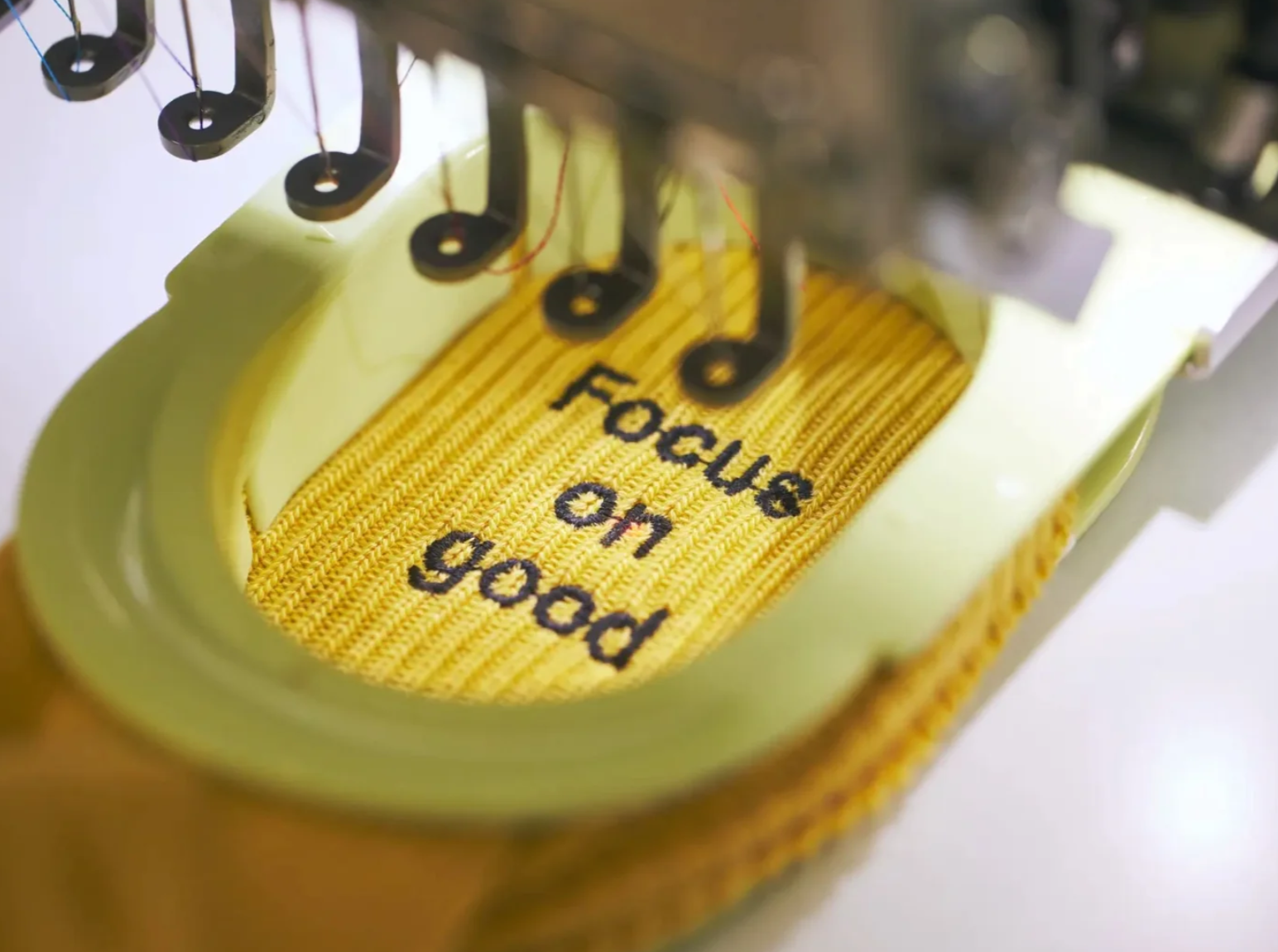
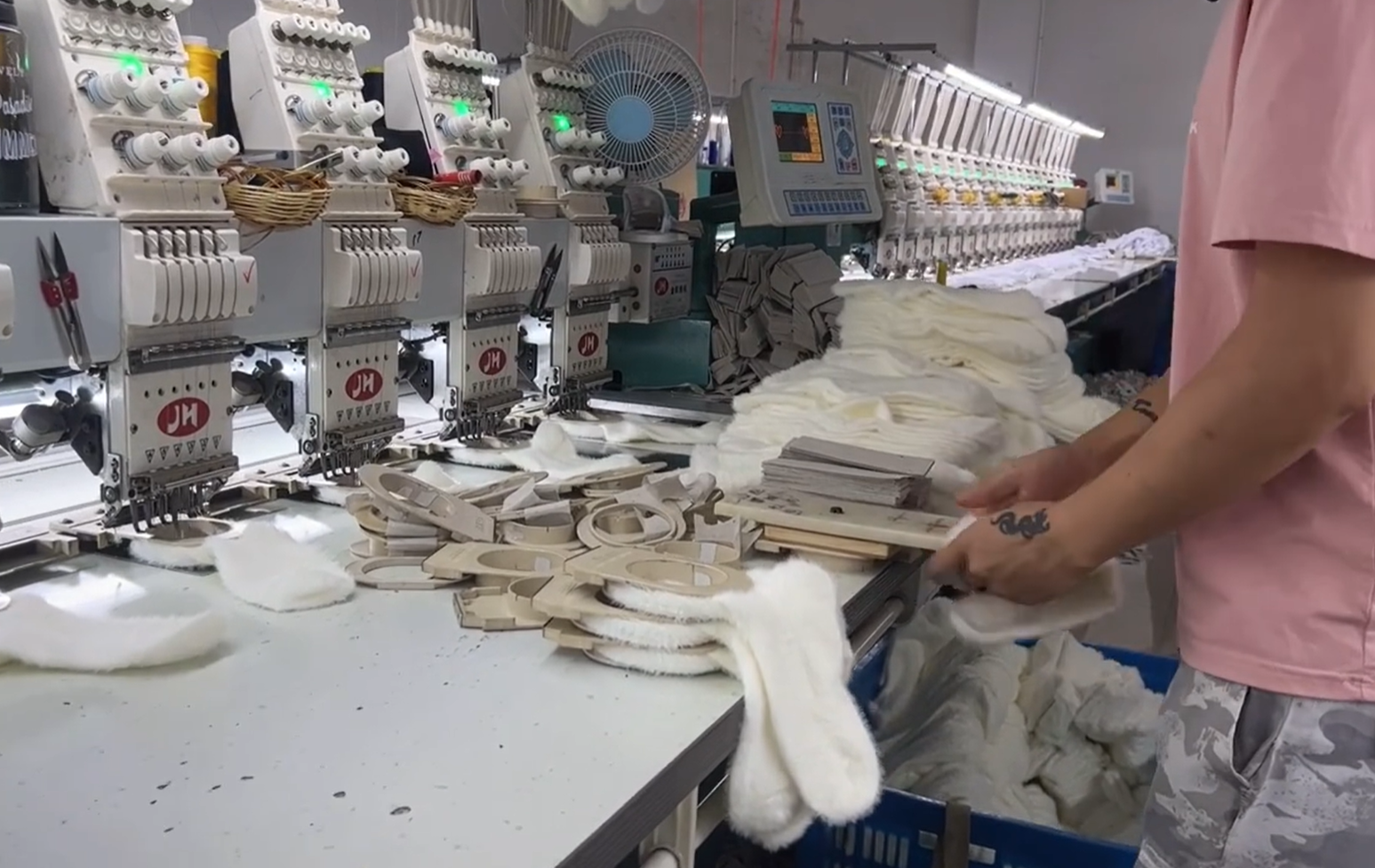
That manual mounting doubles as quality control. The operator eyeballs every logo before it ships — misaligned hoops, broken threads, crooked stitching all get caught at this station instead of by your customer in a one-star review. Slower than printing? Sure. But so is doing things properly, and yet here we are.
5 Types of Embroidered Sock Logos We Make
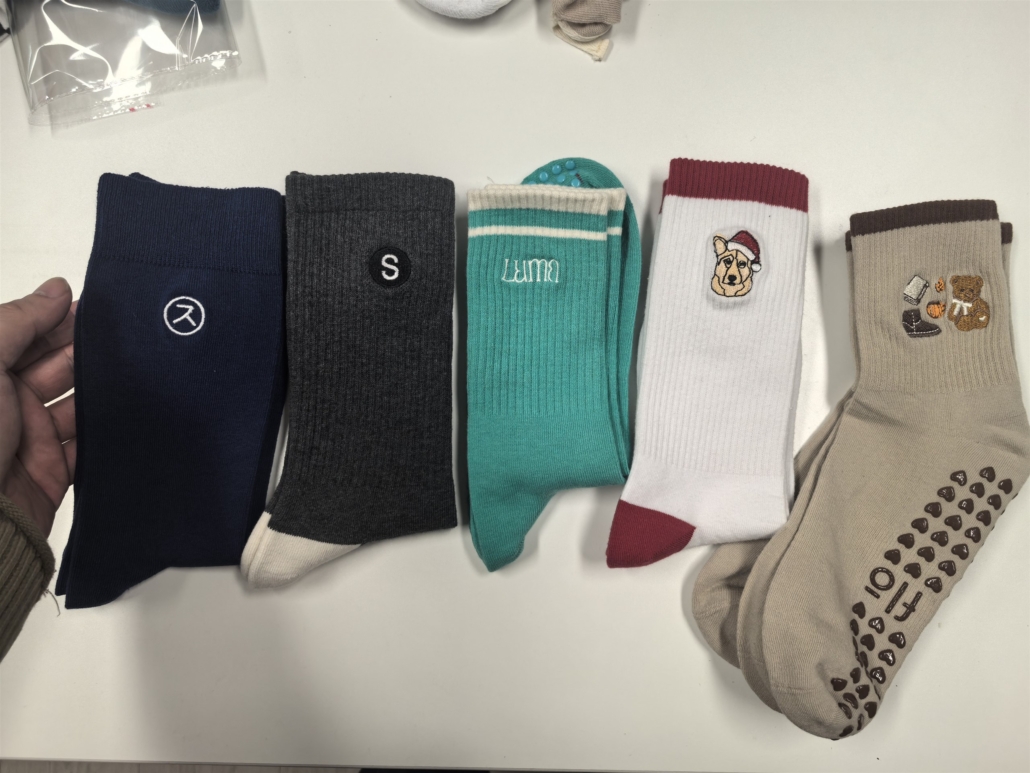
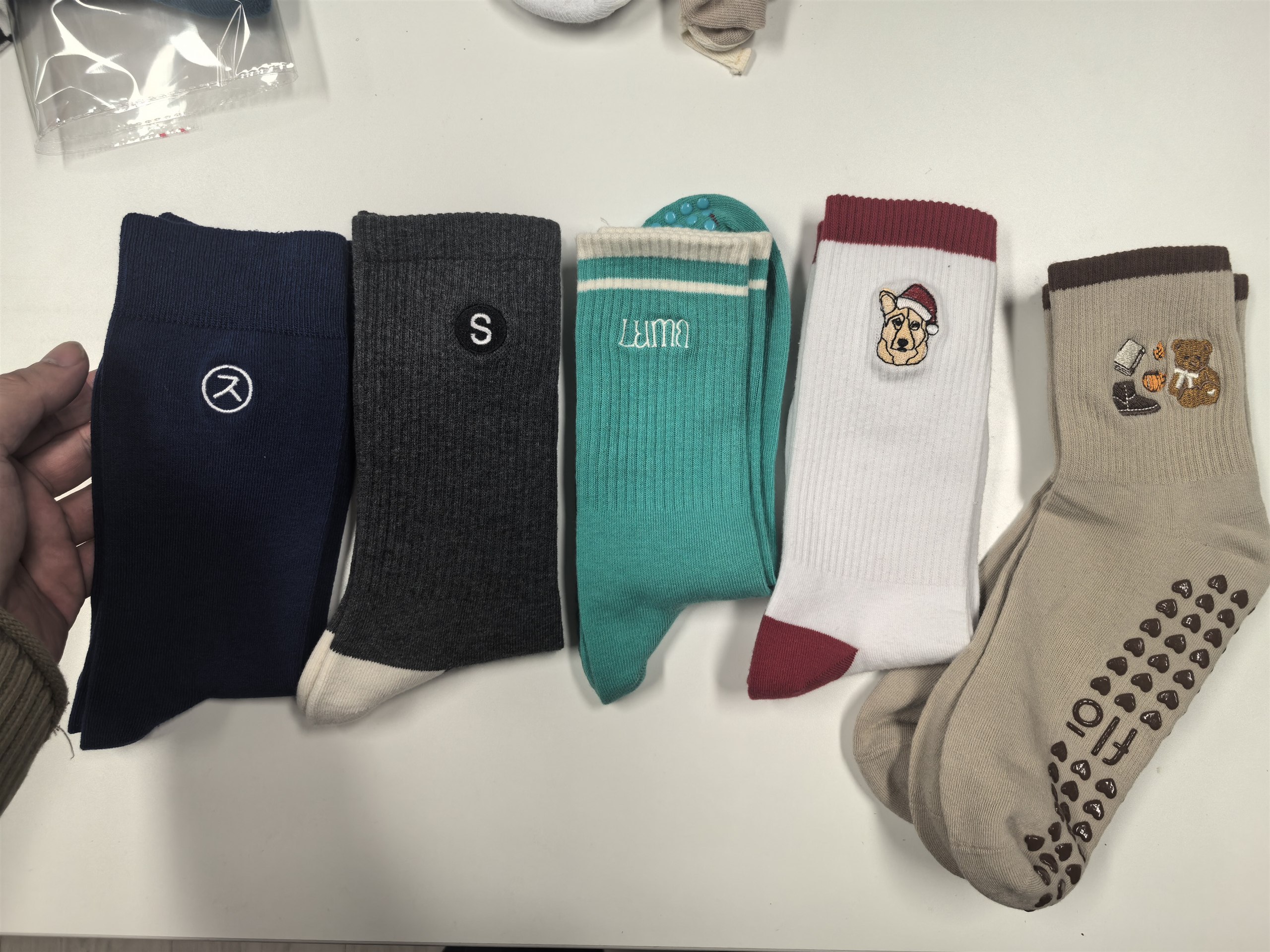
“Embroidered logo” sounds like one thing. It’s actually a menu, and placement is flexible too — cuff, upper leg, top of the foot — anywhere there’s a stable panel to hoop. (Sketching your first design? Our custom sock design guideline covers the file setup before you send artwork.) Here are the five styles we stitch most, all real factory photos.
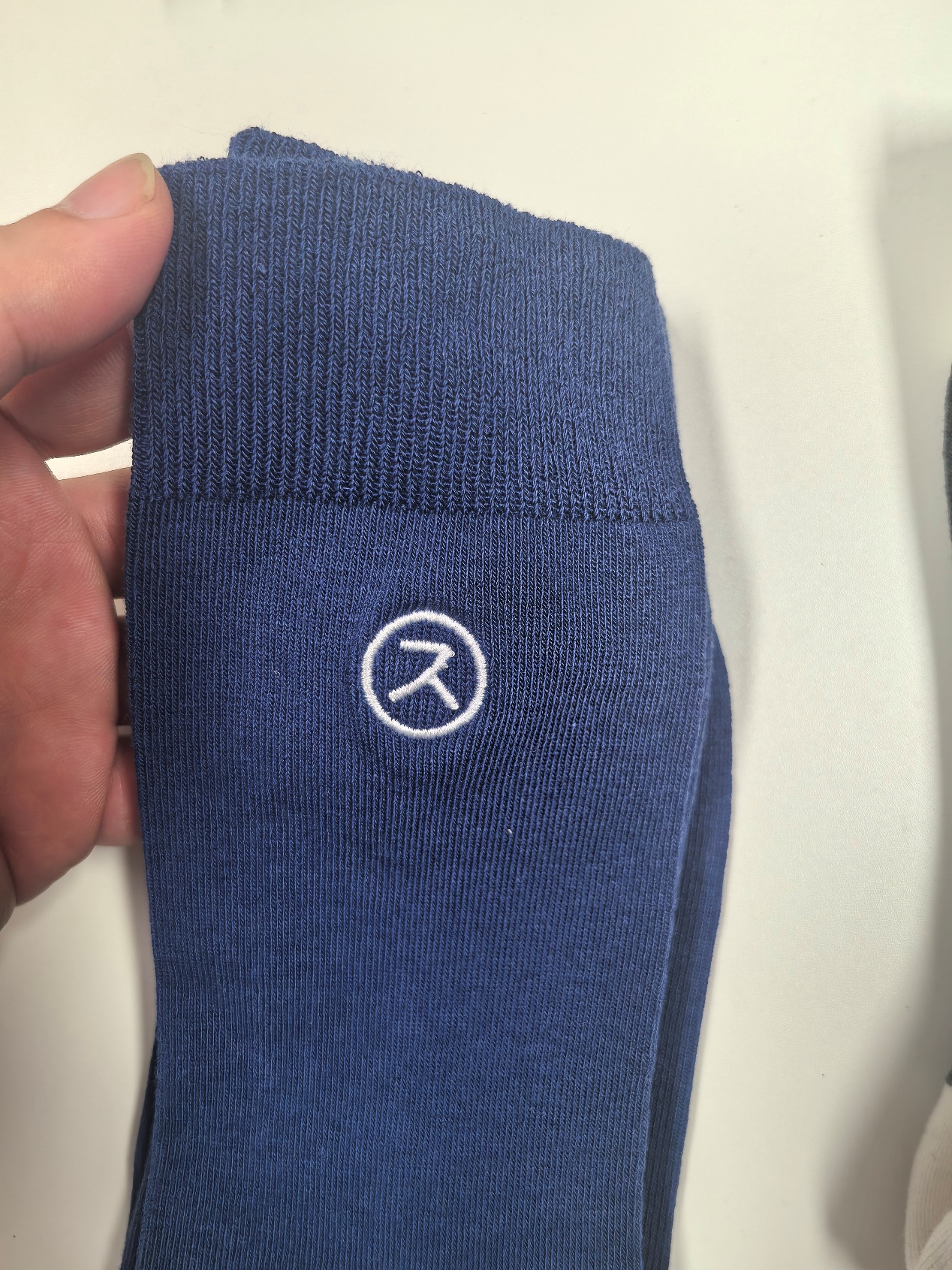
Solid (Filled) Logos
Every millimeter of the background is stitched — a badge with no empty seats. Maximum punch, maximum texture, maximum thread bill. If your logo needs to be readable from across a room, or across a trade show aisle, this is your guy.
Outline (Hollow) Logos
Only the outlines get stitched; the middle stays knit. Lighter, subtler, friendlier to your budget — it reads like a fine pen sketch instead of a filled stamp. Perfect for detailed marks that would turn into thread soup if fully filled.
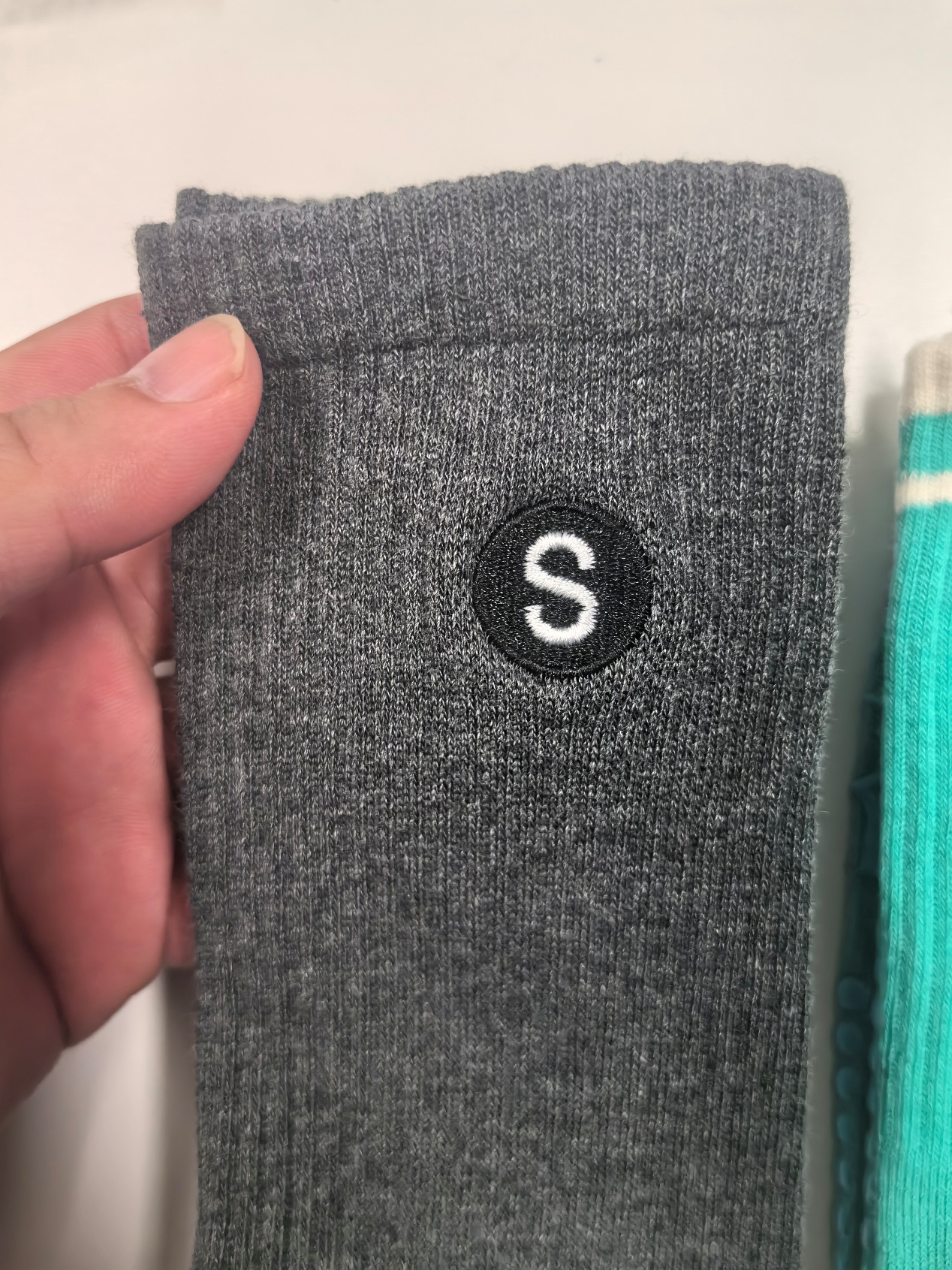
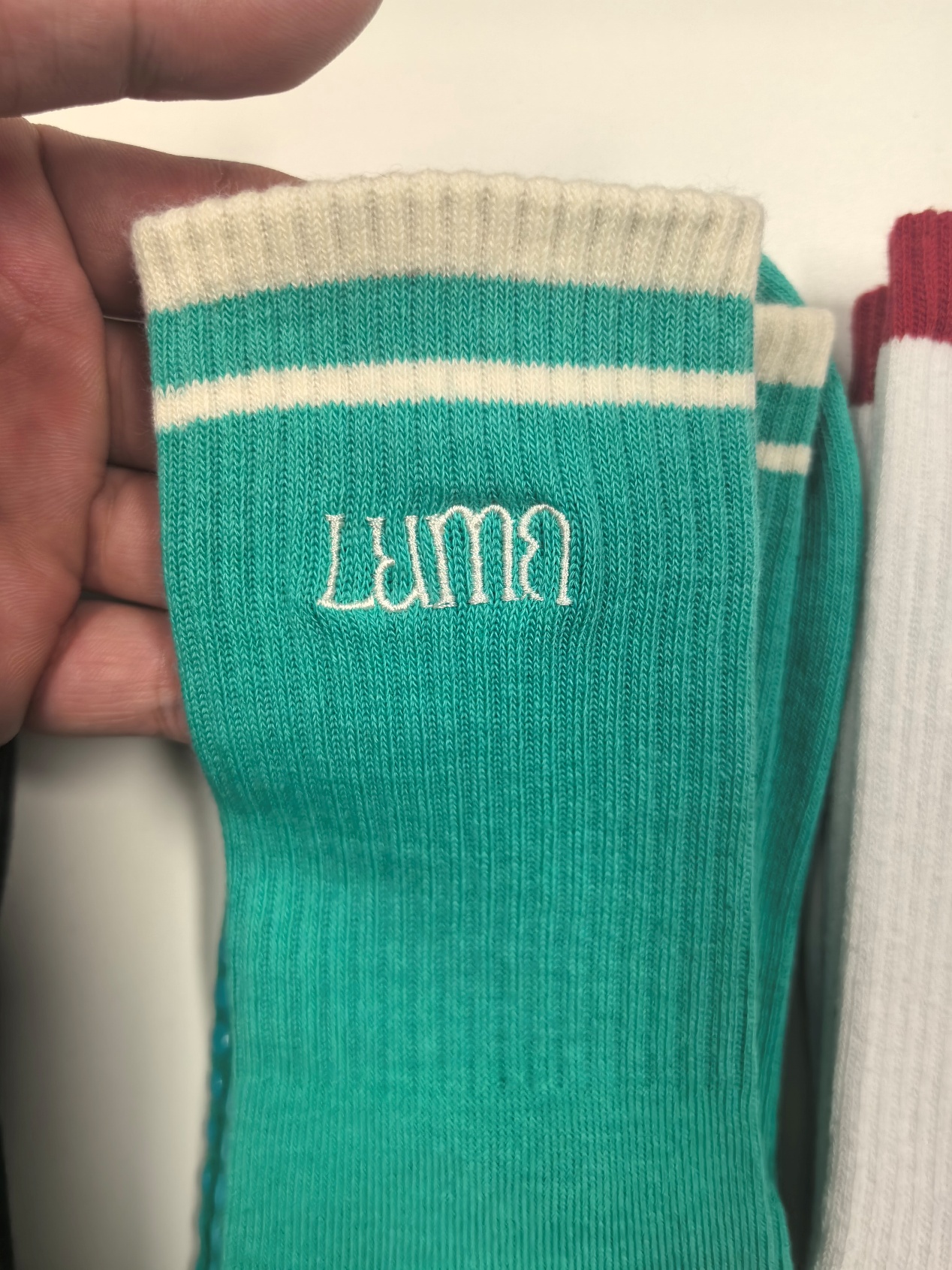
Letter & Monogram Logos
Names, initials, small taglines. This is where embroidery publicly embarrasses jacquard: small knitted letters blur, stitched letters stay crisp. Huge for wedding parties, corporate gifts, and that one groomsman who insists his nickname goes on everything.
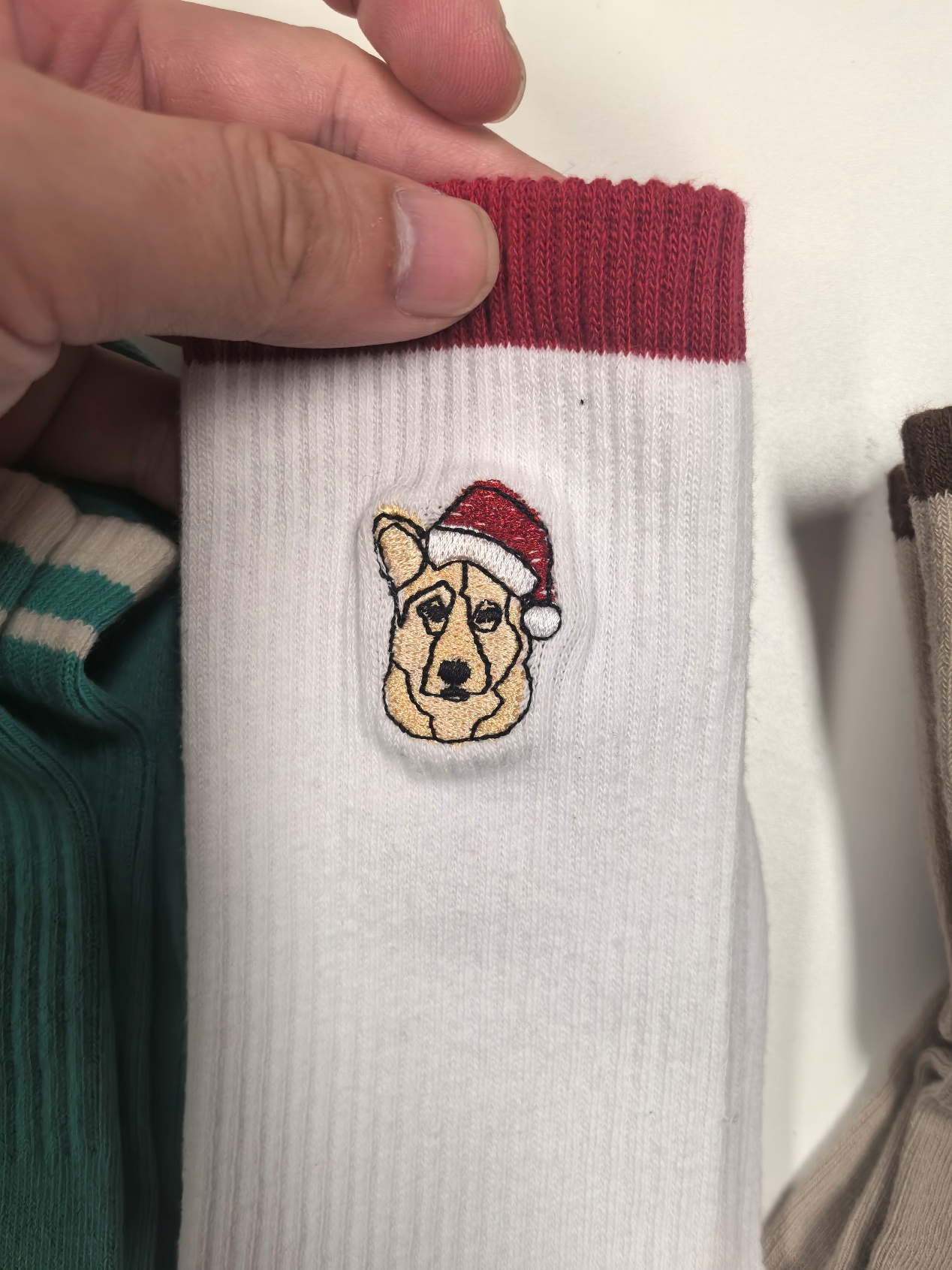
Animal & Mascot Logos
Mascots, pet portraits, holiday characters. The dog wearing a Santa hat below is from a real order, and yes, it’s glorious. Curvy organic shapes that knitting renders like pixel art come out surprisingly smooth in thread. Our operators have stitched stranger things with straight faces.
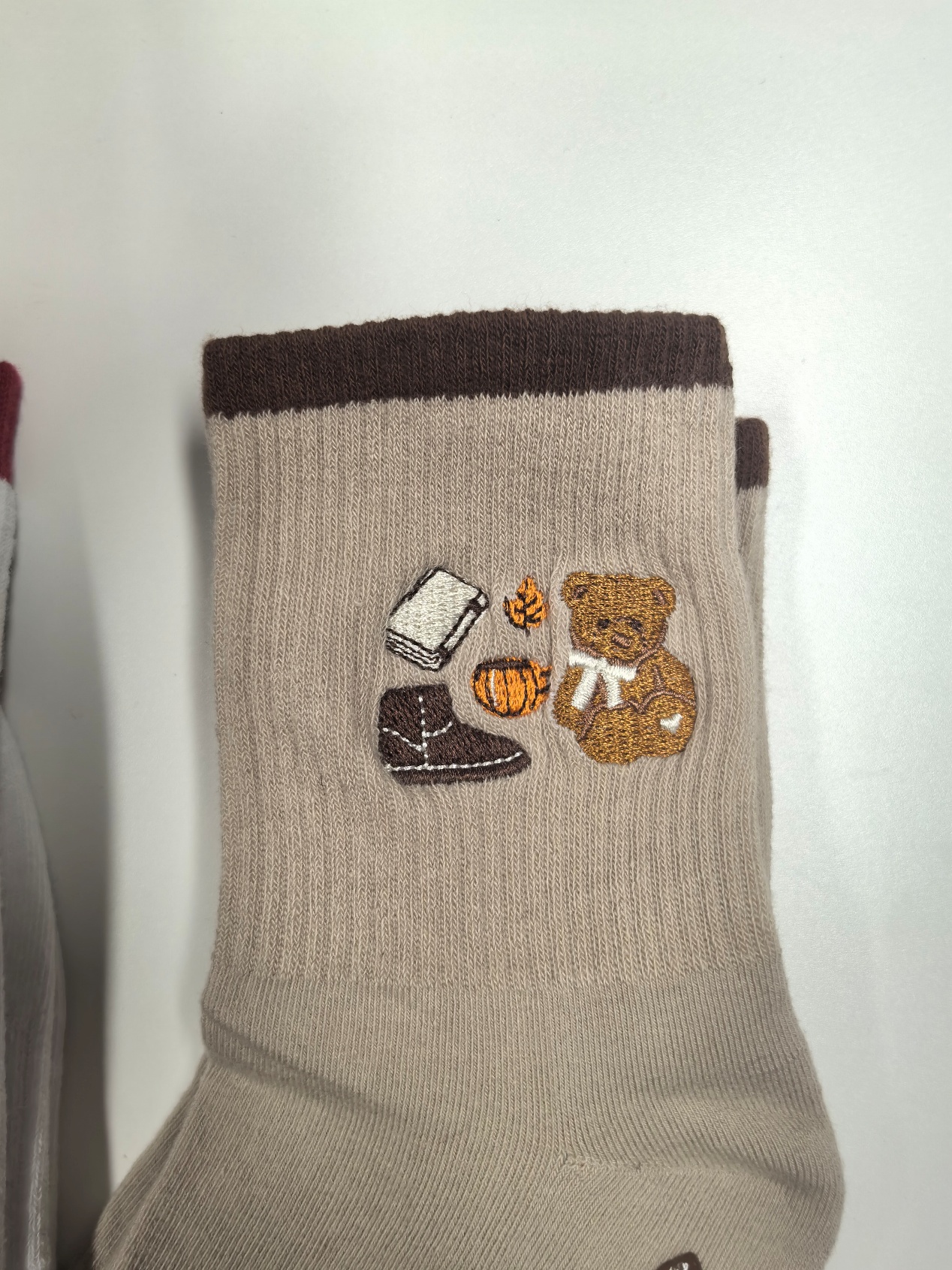
Mixed Multi-Logo Designs
Who says a sock gets only one logo? We stitch several small marks across one sock, pattern-style. The brown sock below carries a bear, a shoe, a pumpkin, a book, and a leaf — basically a tiny personality test on your ankle. It’s also a spoiler for the next section, because this design only works because we split it.
Why Big Logos Get Split Into Several Small Ones
Now the insider bit. Embroidery thread on the back of a logo is dense — that’s the secret behind the clean front. But all that backing thread turns the finished patch stiff. If the embroidered area covers a big chunk of the sock, that whole panel barely stretches. And a sock panel that doesn’t stretch slips down, bunches up, and makes a foot quietly miserable — like wearing a piece of cardboard on your calf.
So for large designs we don’t embroider one big patch. We split the artwork into several smaller logos, each stitched separately, positions mapped so the design still reads as one. A bit more planning up front. Considerably fewer customers returning socks that fight back.
What’s That Paper Inside My Embroidered Sock? (The Backing Story)
Flip an embroidered sock inside out and you’ll find a papery layer behind the logo. Before you draft that strongly-worded email: it’s supposed to be there. That’s the embroidery backing — a stabilizer sheet the logo gets stitched onto, so every stitch anchors to a consistent base instead of wandering around stretchy knit fabric like a tourist with no map.
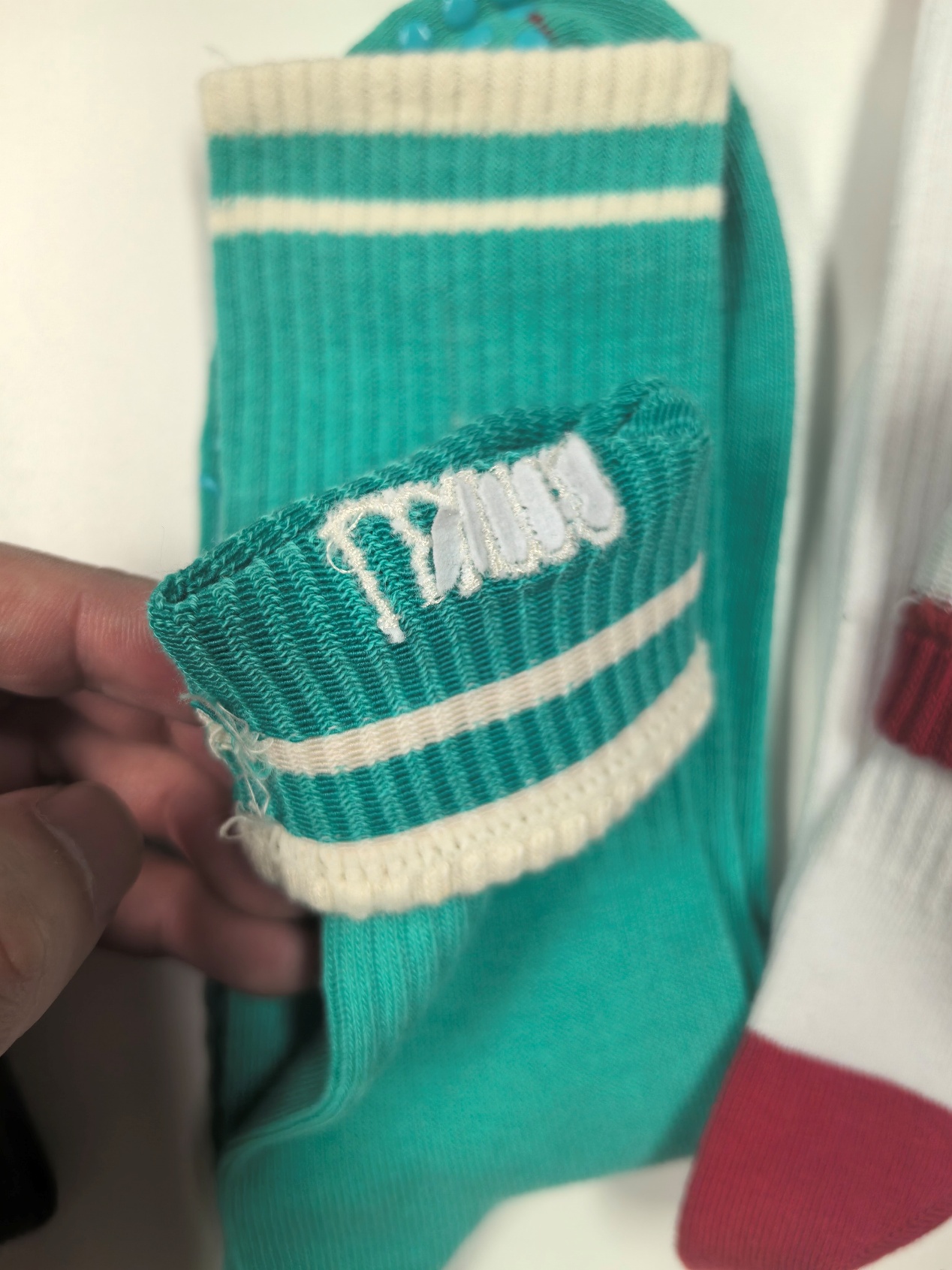
Normally we leave it in. It’s eco-friendly, invisible from the outside, and removing it means hours of fiddly handwork for zero comfort gain — nobody has ever put on a sock and thought, “ah, the inside aesthetics.” If your spec sheet insists, we’ll remove it; some very premium brands want the inside as tidy as the outside. Either way, it doesn’t affect wear, comfort, or your foot’s life choices in any way.
Custom Embroidered Socks from MeetSocks
And that’s the whole trick: knitting and embroidery, in the right order, with a human checking every sock at the hoop. Got a logo that deserves better than being stretched into abstract art? Here’s how we run it:
Send your artwork (a clear JPG, PNG or PDF — no need to redraw anything) → we send back a free mockup → you approve a pre-production sample → we embroider, inspect, and ship. Starting from 100 pairs MOQ, because you shouldn’t need a warehouse to test an idea. Worldwide DDP shipping — customs cleared, taxes handled, delivered to your door, and border officials never email you asking for more money. If you want the unboxing to match the socks, we also do custom header tags, belly wraps and logo boxes. Questions? [email protected] — a human answers. Usually the one who wrote this page, occasionally wearing a dog-logo sock.
FAQ: Custom Embroidered Socks
Is it possible to embroider socks?
Yes — just differently from a flat shirt. The sock is mounted on a rounded hoop that holds the logo area taut while the machine stitches. Any style with a stable panel — crew, knee-high, ankle — takes embroidery happily.
How much does it cost to embroider socks?
There’s a per-pair surcharge over knitted-in logos, because it’s a separate manual process — one sock mounted, stitched and inspected at a time. The exact number depends on logo size, fill style and quantity, so we quote per design instead of pretending one price fits all. Send your logo; you’ll have a real number the same day, no riddles.
Embroidered vs printed vs knitted-in logos — which should I choose?
Knitted-in (jacquard): cheapest and fastest, great for big bold patterns, but it stretches and can’t do fine detail. Embroidery: crisp, raised, dimensionally stable — the one that still looks good after a year of Mondays. Printing: fine for flat graphics, fades with washing. For brand logos on something stretchy, embroidery wins nine times out of ten. The tenth time, someone insists on a full-face photograph on a sock, and we all learn something about limits.
Related reading: the full socks manufacturing process, the custom sock design guideline, and our custom sock service introduction.

Leave a Reply
Want to join the discussion?Feel free to contribute!